In this blog we hear from Victoria Harrocks, Community Arts Coordinator/Dance Teacher at Formby High School, in Liverpool about delivering a dance focused Arts Award Gold programme.
For the past 12 years, I have had the privilege of supporting students as a Gold Arts Award adviser. Delivered during Sixth Form enrichment time every other Wednesday afternoon, the programme provides an opportunity for creativity, artistic development and leadership. This year’s cohort explored a diverse range of artistic disciplines, including claymation, sculpture, still life, drawing for animation, acting for camera, songwriting and choreography. Amongst this group were two exceptional dance students, Chloe and Lily, whose enthusiasm exemplified the spirit of Gold Arts Award.
Unit 1
As a dance specialist, I mentored Chloe and Lily throughout their Arts Award journey. This began with researching opportunities available through local dance studios, creating personal development timelines to support their technical progression, and experimenting with choreography to create original work for Unit 1 Part A ‘Extend own arts practice’. Creating a personal development timeline and regular participation in dance technique classes is essential for students to develop and refine their skills. Equally important, however, is providing opportunities for students to create their own movement rather than spending every class learning and replicating set choreography. While learning choreography develops performance skills, an overreliance on this approach can result in students becoming strong followers rather than independent artists. By regularly generating movement, solving choreographic challenges, and making creative decisions, students develop confidence, artistic independence, and a deeper understanding of the choreographic process, supporting their growth into well-rounded dance artists.
Both students immersed themselves in a wide range of live dance experiences while also participating in our school annual dance show and dance competitions for Unit 1 Part B ‘Career development opportunities in the arts’. These opportunities broadened their understanding of diverse dance styles and techniques, enriching their practical skills and artistic awareness.
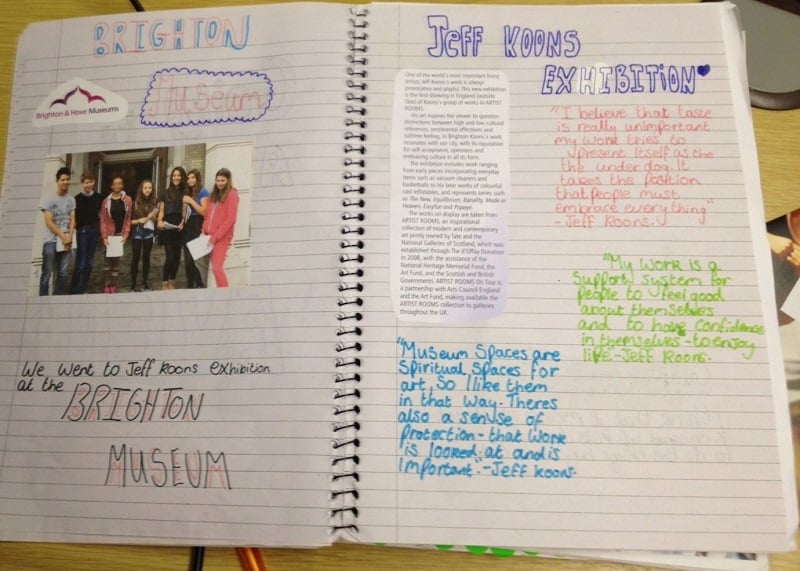
As part of Unit 1 Part C ‘Research practitioners and review arts events’, Chloe and Lily explored a variety of dance genres through live performance events and studied specialist practitioners such as; Bob Fosse, Pina Bausch and Parris Goebel. Their research introduced them to contemporary approaches that emphasise creativity, self-expression and physical storytelling. Through documenting and reflecting on these experiences, they developed a wider appreciation of how choreography can communicate themes and be experienced across different environments and contexts. This growing understanding would later become a significant influence on their own creative work.
One of the most challenging elements of the qualification is the Arts Issue Essay, Unit 1 Part D. We encourage all Gold students to discuss their arts issue essay as a class, debating and sharing their thoughts, opinions, and beliefs on the topic. Once the essays have been written, students present their work to their peers. This is followed by a feedback session, where classmates provide constructive comments and suggestions, benefiting both the presenter and the audience by encouraging reflection, discussion, and improvement. Lily chose to investigate body image within dance, exploring how perceptions of the body can influence dancers’ experiences and opportunities. Chloe focused on rejection within the dance industry and its impact on mental health, examining the emotional challenges faced by performers. Lily and Chloe engaged thoughtfully with complex issues, offering a range of viewpoints, evaluating differing perspectives and formulating their own conclusions. Although challenging, the Arts Issue essay contributes significantly to the development of a student’s independent study, research, and analytical skills.
Throughout the programme, Chloe and Lily demonstrated a genuine commitment to developing both their performance and choreographic skills. As their confidence grew, they took on increasing responsibility, each leading a school dance club. We held weekly meetings to monitor progress during the creation of new work and in preparation for performances.
Filming rehearsals became an important tool for movement retention, choreography development, and performance analysis. For Chloe, filming was initially a way to stay on track, but it gradually became an integral part of her process and performance.
The girls ran their classes with the professionalism of a dance company, expecting punctuality and commitment from participants. By introducing new and challenging choreography at each rehearsal, they kept sessions engaging and exciting for the performers. Their leadership roles highlighted not only their technical dance abilities but also their aptitude for teaching and their willingness to support the learning and development of others.
Unit 2 Arts Leadership Project
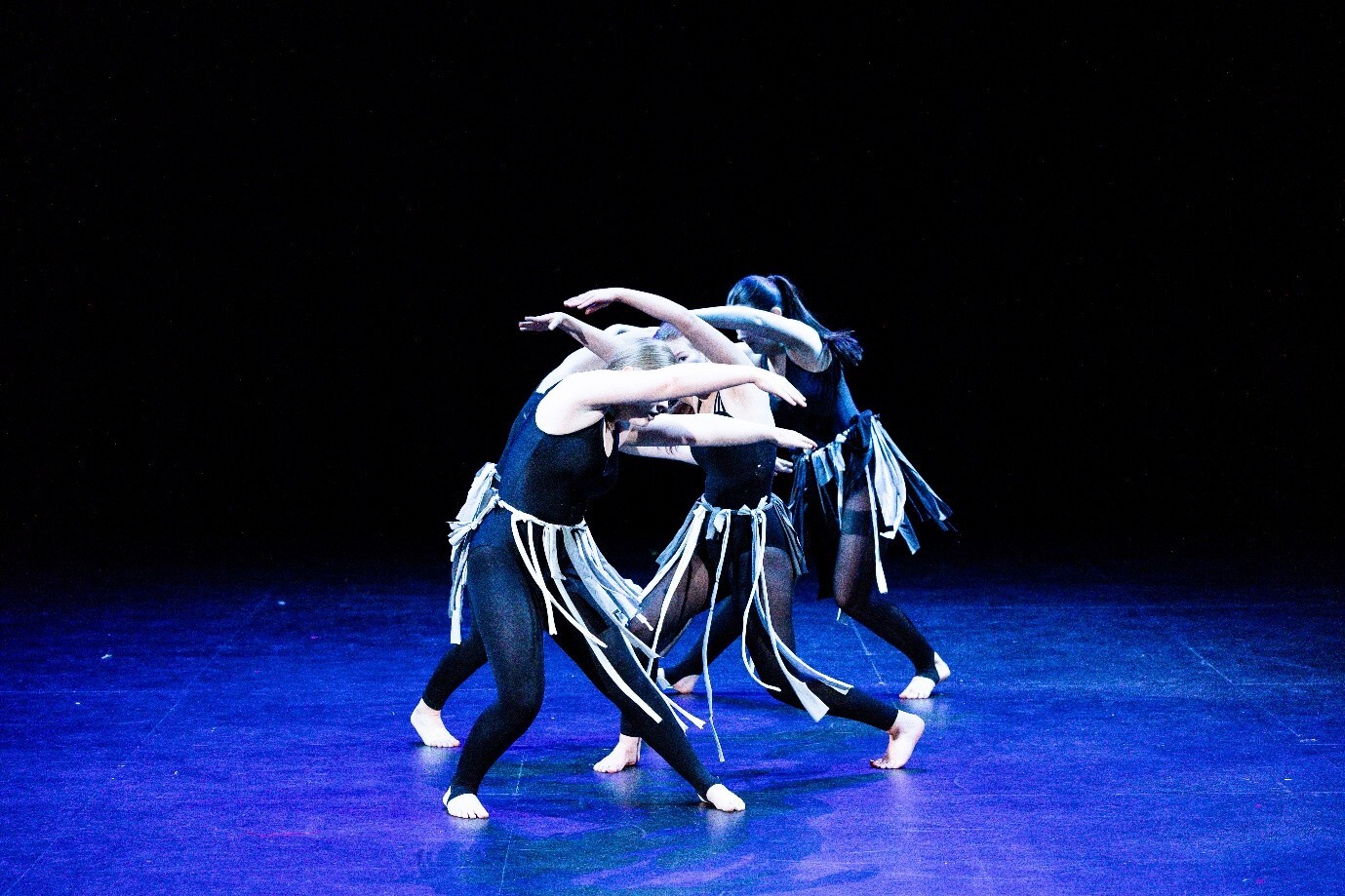
To create the showcase performances for Unit 2, each dance student took ownership of creating original choreography, teaching material to performers, coordinating rehearsals and organising the final presentations. Chloe chose to focus her project on choreography and innovative ways of presenting dance. She created an original lyrical contemporary dance work and documented the rehearsal process through time-lapse filming as she taught the choreography to a group of dancers. During the final performance, the dancers performed the piece live before an audience while the time-lapse footage of the rehearsal process was projected simultaneously behind them. This imaginative combination of film and live performance allowed viewers to experience both the choreographic process and the finished work at the same time. Chloe’s creative use of filmed projection demonstrated a sophisticated understanding of performance presentation and highlighted her emerging strengths as a choreographer.
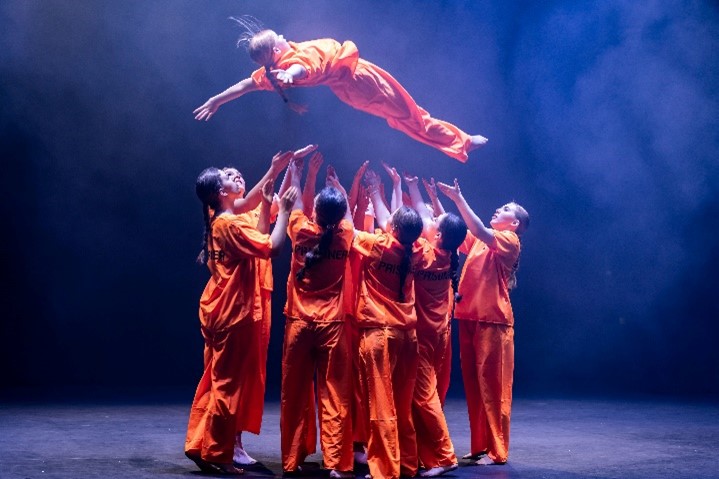
Lily’s project centred on commercial dance and performance. Lily also explored a variety of dance styles, including pole dance, commercial dance and heels training. Drawing on these experiences, she created and performed a solo commercial, burlesque-inspired heels dance, and her Sixth Form company performed their commercial dance piece for her final presentation.
Chloe’s interest in dance as a powerful form of communication, and its ability to explore historical, social and political themes influenced the development of her final choreographic work. ‘You Stole the Show’ which explores the idea of performance - not just as an artist, but also as a person and the various ways we 'perform' in our own lives. Similarly, Lily’s exploration of commercial and current performance-based dance styles encouraged her to consider how confidence, identity and self-expression can be communicated through movement. Both students came to appreciate the potential of dance not only to entertain but also to provoke thought and communicate important messages.
We are incredibly proud of Chloe and Lily for achieving their Gold Arts Award. They embraced every opportunity the qualification offered, demonstrating independence, creativity and artistic ambition. Their projects showcased not only a passion for dance but also a commitment to developing their practice as emerging artists and leaders.
Their success reflects the very best of what the Gold Arts Award seeks to achieve: nurturing confident, reflective and creative young people who are ready to make meaningful contributions to the arts.
Congratulations to Chloe and Lily on this outstanding achievement. We look forward to seeing where their dance journeys take them next.
Students’ top tips for completing Unit 2:
-
Create a meeting memo before every discussion or planning session.
-
Follow the guidance and objectives outlined in the Arts Award toolkit.
-
Work chronologically through Units 2A – 2C.
-
Film each event organisation meeting to strengthen evidence.
-
Convert recordings into digital transcripts and share them with the group.
-
Record and use the transcripts to help track progress and stay organised.
-
Photograph and note the set-up of the show and performance for 2D – 2E.
Advisers’ top tips for delivering a dance based Gold award:
Encourage students to create an ongoing blog, vlog, or video diary to document their dance journey. This helps them:
-
Track technical and artistic progress over time.
-
Reflect on achievements and areas for improvement.
-
Develop valuable digital skills such as filming, editing, and content creation.
-
Build evidence for their Arts Award portfolio.
Expose Students to Live Dance through:
-
Theatre trips
-
Dance workshops often advertised on Eventbrite
-
Guest artists sourced from your PTA, local theatres, dance schools, universities
-
Your local CAT Scheme (Centre for Advanced Training) offer schools free workshops
-
University dance open days.





Comments & Replies