


Arts Award in criminal justice settings

BY: Guest Writer
02 Nov 2026
Reading time:
7 mins


Jane Gray, Project Manager at Blue Cabin, and Catherine Forster, Care Leavers Support Worker at Nepacs, describe the delivery of Bronze Arts Award within Creative Aid - a co-creation project with care experienced young men at HMP/ YOI Deerbolt, which supports the young men to develop their arts skills, and be recognised as artists.
'This is going in my folder. I’m proud of this one.’ (Creative Aid participant and Bronze Arts Award achiever)
Blue Cabin is a charity based in North East England which develops and strengthens relationships between care experienced individuals and the people in their lives through trauma informed creative activities. They are also a Trinity Champion Centre. Nepacs is a charity (with a base in North East England) which aims to promote a positive future for people who have been affected by adverse situations in their lives. They work with families, young people and children, as well as those affected by the criminal justice or care systems.
We love Arts Award at Blue Cabin! We have a varied Arts Award offer, delivering Discover, Explore and Bronze across our programmes. It’s a strategic, optional accreditation offer that supports care-experienced people to gain recognition for their creative learning and progression. We work in partnership with charities and local authorities to deliver Arts Award projects where it meaningfully strengthens and adds value.
In our initial consultation with the young men at Deerbolt, they told us they wanted to take part in a variety of arts activities, and that they wanted to achieve a qualification as part of it. So, Arts Award was a completely natural fit. Over the last three years, 21 young men have achieved Bronze Arts Award through Creative Aid, and, thanks to our wonderful funders, The National Lottery Community Fund, we have two more years of delivery. One of the aims is to support the young men to develop their confidence and skills, to lead on to other opportunities (training/employment), whether that is within the prison, or when they are released.
Creative thinking - how to deliver and capture evidence
Blue Cabin and Nepacs work closely together on Arts Award, with Nepacs working directly with the group. We meet up regularly and go through the portfolios to keep on track of evidence and ensure we have all we need for the final portfolio assessments.
The Blue Cabin artists in residence who work with the group are also crucial to the success of the project, being on board and supporting the process along the way.
We’ve found that the best way to capture evidence is to do it one-to-one whilst the rest of the group are doing an arts activity and are engaged in something practical. We use templates, which one of our artists designed this year. Sometimes the group stick them directly into their sketchbooks, and other times, we use the questions to prompt the responses that get written down.
Sketchbooks (without any metal parts such as staples, because we’re in a prison environment), are always used for the portfolios, as we can’t use any tech, or scissors. This has been a very different setting for Blue Cabin to work in. Being told ‘you can’t use cameras or the internet’ means you have to get creative and adapt!
Taking Part
To begin Bronze, for Part A (Explore the arts as a participant), the young men work with three artists in residence, who each deliver blocks of six sessions, plus co-deliver sessions with other artists. There have been a range of artforms and activities over the years, including creative writing, printmaking, theatre, conceptual visual art, typography, songwriting and music and ceramics. The focus is very much on process, rather than end product, but we’ve always had plenty of incredible pieces of work to include in the online galleries and limited edition books, which are produced each year. The books are for the young men to keep and gift to the people in their lives. Blue Cabin and Nepacs also share them as gifts. A Creative Aid exhibition, Looking at Life, is also now on tour! Take a look at the online galleries, Engraved on Paper, Piercing the Sky and Time Never Stops.
Being an audience member
For Bronze Part B (Explore the arts as an audience member), we can’t take the group on any trips to the theatre or galleries, so we need to bring it to them. We’ve been lucky enough to have the wonderful Open Clasp Theatre Company come into Deerbolt for the past few years, to do screenings, performances and workshops with the groups. They specialise in work within criminal justice, and deliver Arts Award themselves, so we are in very good hands.
They really supported the reviewing element of Part B, by holding conversations with the group during the post-show workshops and writing about the session afterwards.
We need to schedule these visits well in advance, and sometimes, one or more of the lads might not be able to attend, due to illness, other appointments, or if an incident has occurred. So, we always have a back-up for Part B, which is generally a book that one of the artists in residence uses with the group. Participants can read the book and then create a review of it. They could also review a film, or a television series that they can watch on their own in their cell too.
Arts inspiration
The main research element for Bronze is Part C (Arts Inspiration), and Nepacs have a conversation with the group about who they like - what’s their favourite music/film/television show etc. Sometimes it is REALLY hard to encourage them to think about someone, partly because, as they tell us, they aren’t used to being asked what they like, or for their opinion on things, so they can find this challenging.
Nepacs print out lots of information from the internet and bring it in for the young men in the group. They go through the information and choose the elements they find most interesting and connect with the most. They then create a visual piece of work depicting their chosen person and share them with each other within the group.
‘The portfolio process helps the lads develop planning, critical thinking, and reflective skills - foundations for education or employment. One lad shared,
‘ I want to do more of this when I’m out.’’ Creative Aid Year 3 Interim Report
Skills Share
The Part D Arts Skills Share has tended to come towards the end of each year, once the young men have developed confidence and built trust and relationships. They discuss what they would like to do with Catherine from Nepacs and do the planning with her. The actual skills share has often been delivered as part of one of the artists in residence sessions. It has included teaching another member of the Nepacs team how to write and perform a rap, showing Catherine how to use perspective in drawing, and teaching one of the creative writing artists in residence how to use winter green for print making.
Three tips for delivering Arts Award in a prison setting
- Capture evidence one-to-one (we do this during creative activities, as participants are engaged in something practical)
- Plan well in advance (for example, we book artists and companies in at least six months in advance to give time for security clearance, training and planning)
- Have a back-up plan (like having a book participants can review, if they’re unable to attend the planned arts event/experience).
To find out more about Creative Aid and its impact on care experienced people in Deerbolt prison, take a look at this webpage.
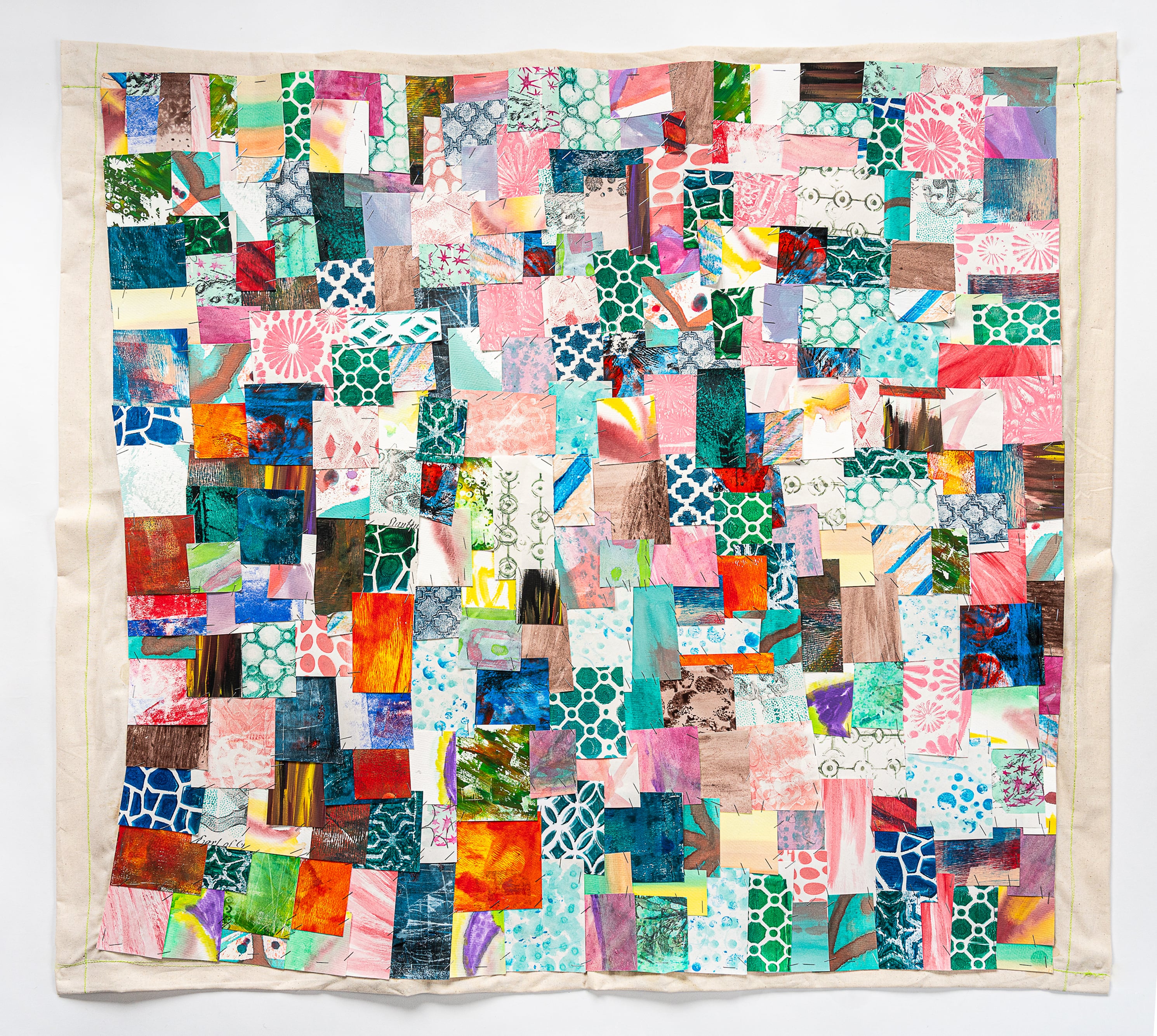
Photo by Blue Cabin of a collaborative piece of artwork created by Creative Aid participants and Bronze Arts Award achievers.

Comments & Replies