Bath Preservation Trust delivered an inclusive Arts Award Explore programme for 11 home educated children, helping them develop their creativity and confidence through flexible workshops and independent projects, culminating in a mini exhibition celebrating their achievements. Emily Brown, Learning and Engagement Assistant at Bath Preservation Trust tells us more.
Bath Preservation Trust worked with 11 home educated children for six weeks over the summer to deliver an exciting and inspiring Arts Award Explore programme which supported the creativity of each individual young person.
Why home educators?
The home educating community in Bath has grown in the last few years. Increasingly, this includes families of children with Autism, ADHD or other special educational needs, who are looking for alternatives to mainstream schooling. The Learning Team at Bath Preservation Trust has developed a good relationship with local home educating families over the last three years, providing exciting and varied learning sessions that welcome and support diverse learning needs. We decided to start by focussing our delivery of Arts Award with home educating families, as we felt the flexibility of the qualifications would work well with the independent nature of learning at home.
After running a successful Arts Award Discover workshop for home educated children, we wanted to offer a progression opportunity for those who were keen to take on the next challenge. We hosted our first Arts Award Explore programme at our flagship museum, No.1 Royal Crescent.
Our previous experience of working with home educating families really helped us identify our priorities for the programme. In order to support each child’s learning needs, we designed a programme that offered lots of space for individual choices and autonomy as well as plenty of guidance and support where required.
We planned a series of workshops which consisted of two full days, two drop-in mornings, and a sharing event. We felt that having a couple of longer days rather than a weekly commitment was easier for families to plan into their timetables.
Bringing our exhibitions and museum to life
No.1 Royal Crescent Museum is furnished and decorated to show what a fashionable townhouse in Bath would have looked like during the late 18th century. The rooms are full of patterns, pictures and objects that provide plenty of inspiration for creative activities. There is also a gallery offering a programme of historic and contemporary art exhibitions. Our Explore programme coincided with a photography exhibition - Handle With Care: Cornelia Parker and Historic Glass. This provided us with a great opportunity to deliver arts activities linked to the exhibition for Explore Part A (Take part), as well as inspiring participants for their artist research in Part B (Explore).
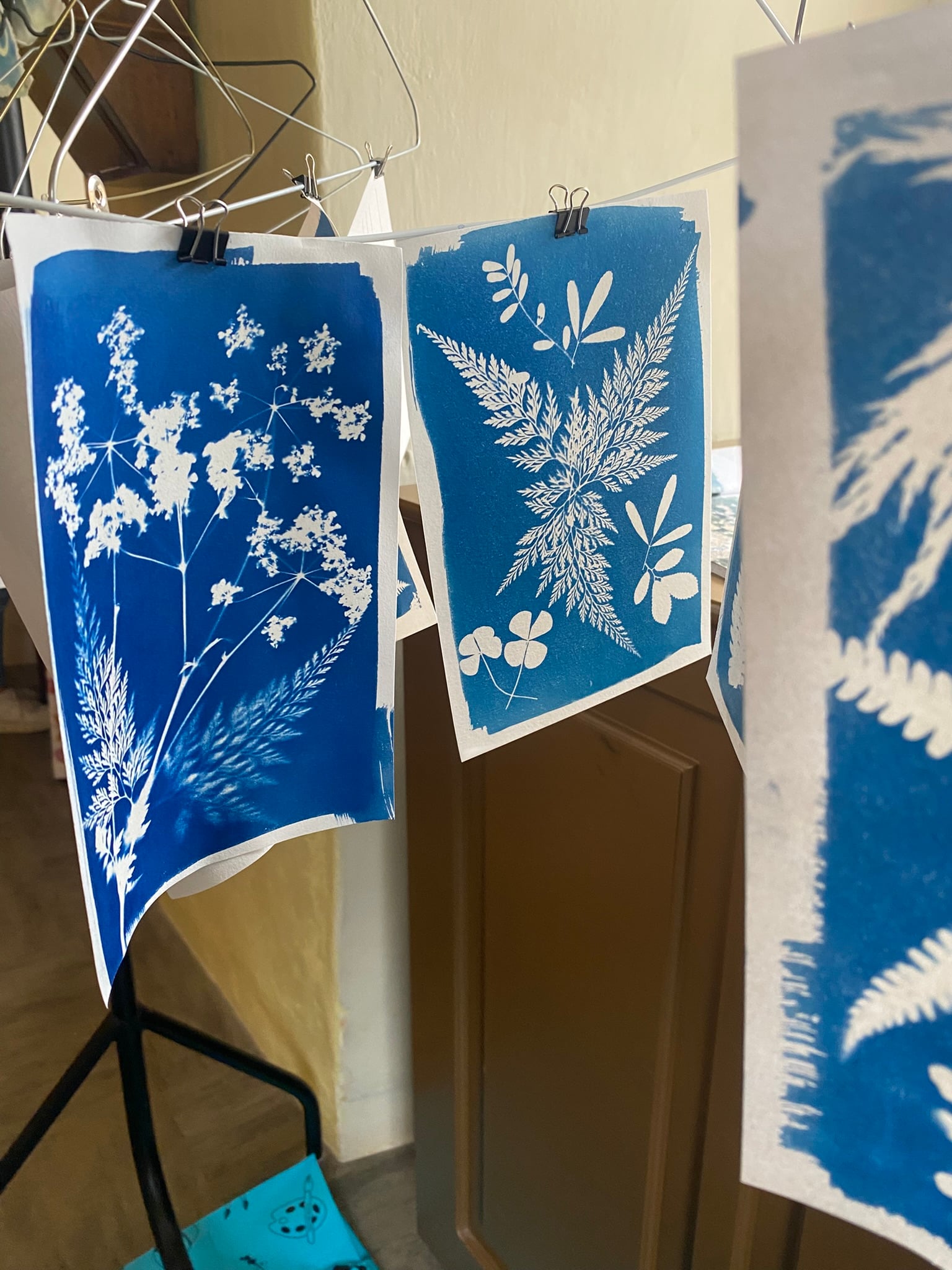
We ran cyanotype and monoprinting workshops inspired by our exhibition. We also ran a clay tile workshop, which took inspiration from the patterns in the museum.
Research projects
Part B (Explore) was mainly completed independently, with us checking in on progress and supporting as needed. We kept this part quite flexible, allowing each child to pick an artist and arts organisation of their choosing, but offering suggestions for those who needed more guidance. There was an impressive array of research, with some children researching multiple artists in a particular field.
As an introduction to researching arts organisations, we showed the group around No.1 Royal Crescent and set up a Q&A with our Curator so they could find out about what it’s like to work in a museum and gallery.
Around half the children picked our museum as their chosen organisation. This offered a lovely opportunity for peer support, with children sharing how they had completed certain sections and helping each other.
Supporting individual creativity
Part C (Create) was where we let the children have free rein. This part was completed at home, with us supporting any planning, materials and the recording of evidence. We kicked off with a mood board activity, where young people put some ideas down on paper in a really visual and creative way. This was great evidence for the logbooks as it showed their planning processes and was particularly effective for children who found writing more of a challenge.
We offered Part C as drop-in sessions where the children could come in and use our resources to create their artworks or simply use the space as a place to work. This also offered parents time to chat to us and ask any questions about the process.
The breadth of creativity and talent shown by the participants was fantastic; there were amazing works of art created in collage, photography, model making and more.
Mini exhibition
We delivered a mini exhibition for Part D (Share) in the museum learning space where participants displayed their artwork and logbooks. We invited museum staff to attend the sharing as if it was a professional exhibition. This helped create a sense of occasion, and the staff were blown away by the creativity and talent on show.
Each participant had a comments page in front of their work so they could collect feedback from peers, museum staff and family. This was a really interactive way to record the sharing process, and meant the children had some really positive feedback to take away with them.
We were very proud of the confidence and courage shown by the children in the sharing event. They all articulated their ideas brilliantly, even those who were anxious about talking to people. In their final reflections about the Explore programme, many of the children mentioned how much they enjoyed the exhibition event and seeing each other’s artworks.
Reflections
We wanted to make sure each child was able to thrive on their Arts Award journey. To ensure everyone was supported and meeting the Explore criteria, we worked closely with each participant and their grown up, providing individual feedback at each stage. While this approach was quite time intensive, it meant that every child was able to approach their Explore journey in the way that worked best for them.
Working with home educated families might feel daunting due to the potentially broad mix of ages, needs and expectations in the room, but our experience has been overwhelmingly positive. Every child was fully committed to the project and received their Arts Award Explore certificate. It was a real joy to see them grow in confidence and embark on their own creative journeys.
We are planning to build on this success by introducing Explore at the Herschel Museum of Astronomy next year, and further expanding our Arts Award Discover offer across all our sites.
Get in touch for more information.
Image: by Bath Preservation Trust, Cyanotype images




Comments & Replies