In the last in our series of blogs focusing on Bronze, we will explore Part D, Arts Skills Share. With guidance for planning, capturing and reflecting on their Arts Skills Share this will be a handy blog for advisers approaching Bronze Part D.
What’s at the heart of the part?
For Bronze Part D, young people begin to develop their arts leadership skills by planning, delivering and reflecting on an activity where they pass on their arts skills to others. The arts skill could be something they learnt as part of their Arts Award or from elsewhere in the curriculum, or it could be an existing arts skill that they have.
In their portfolios, young people need to demonstrate what the activity is, why they have chosen it, and how they plan to pass on their arts skills. They also need to include evidence of the activity happening and reflection on how it went.
Young people as leaders
Remember that Part D is not about simply performing or presenting an artwork – it’s about guiding someone else to develop an arts skill. Many young people gain real confidence through this part, as they often don’t believe they can support someone else’s learning, and then discover that they absolutely can.
Try to be responsive to the individual young person’s different interests, abilities and confidence levels. For example, some young people might be happy delivering a workshop to a group of other students, whilst others may be more comfortable passing on skills on a one-to-one basis. For young people who don’t want to do something face-to-face, think about other ways they could pass on their skills, such as writing a ‘how-to’ guide.
You could kick off by supporting young people to consider some of the qualities and characteristics demonstrated by good communicators and encourage them to think about how these might apply to their own Arts Skills Share.
Planning
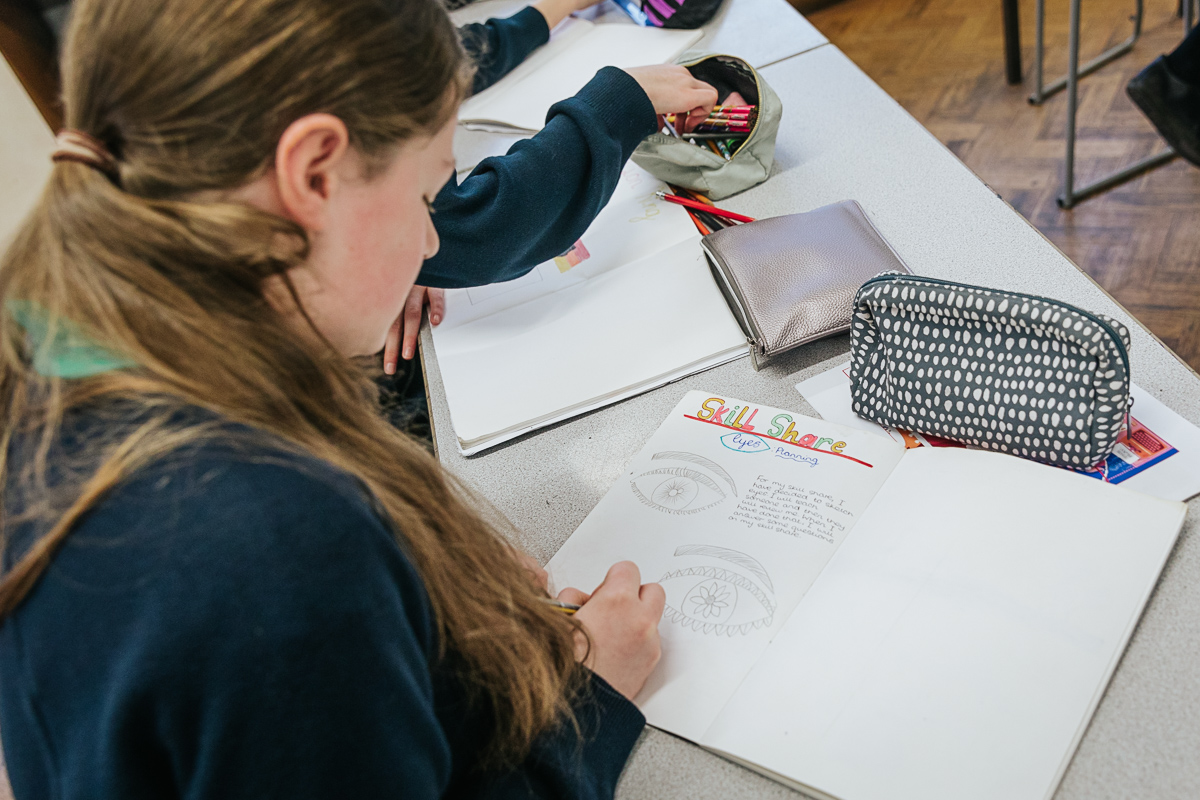
Young people should plan their skills share, and this planning needs to be evidenced in the portfolio. Planning could take the form of:
- written schedules or action plans
- audio or filmed recordings of verbal planning
- diagrams/mind-maps/flow-charts
- PowerPoint slides
To help young people with their planning, you could create check lists or templates based on some of the following questions:
- What is your arts activity and why have you chosen it to pass on?
- Who are you going to share your skill with and how will you make it interesting for them?
- Will you demonstrate the activity or pass on your skills another way, eg through a ‘how to’ guide or video tutorial?
- What will your step-by-step process be?
- Will you need to organise any special equipment or resources?
- How will you collect evidence of your skills share happening? (eg photos, filming)
- What do you want the other people to know/ understand by the end of your arts skills share?
- How will you know it has gone to plan?
Passing on a skill
Young people need to provide evidence of their skills sharing activity. Evidence might take the form of film, photographs or audio recording.
Evaluation and reflection
As well as planning and doing their Arts Skills Share, young people need to reflect on how it went and how well they think they did. They can gather feedback from participants to inform this self-reflection (but this should not replace their personal response). Evaluation could be done through using templates and feedback forms, recording or filming discussions after activities, creating “feedback walls” with everyone’s feedback written on post-it notes (you can stick the post-it notes into the portfolios or take photographs of them), through some form of visual display indicating understanding (each participant holding up a traffic light for instance) which can then be photographed, or by creating mind maps. You could use the below questions as a starting point to facilitate reflection.
Questions for young people to think about:
- What went really well?
- What didn’t go so well?
- What was your favourite bit of the skills share and why?
- What would you do differently next time?
- Did anything happen during the skills share that you hadn’t expected?
Questions for young people to ask participants:
- What new arts skills/knowledge have you learnt?
- What was the best bit of the activity?
- What do you think could be improved for next time?
Support Resources
The following resources could help with your Bronze delivery or planning:
Portfolio building templates
Evidence checklist
Bronze Activity mapping resource
Five day Bronze
If you found this blog helpful, do take a look at the other blogs in this series, looking at Part A, Part B and Part C in more detail.






Comments & Replies